
Does Car Insurance Cover Food Delivery?
Personal auto policies exclude paid food delivery as business use — DoorDash and Uber Eats shifts need a delivery endorsement or a commercial policy instead.
Why you can trust this guide
- Written by Daniel Reyes, AINS, former licensed P&C agent — independent insurance education publisher.
- Factual accuracy reviewed and signed off by Marcus Hale, CPCU, AINS, licensed P&C agent (Independent insurance reviewer).
- Every factual claim traces to a regulator, statute, or policy document — sources are listed at the bottom of the page.
- Last verified ; time-sensitive guides are re-checked at least twice a year. Read our editorial policy.
On this page
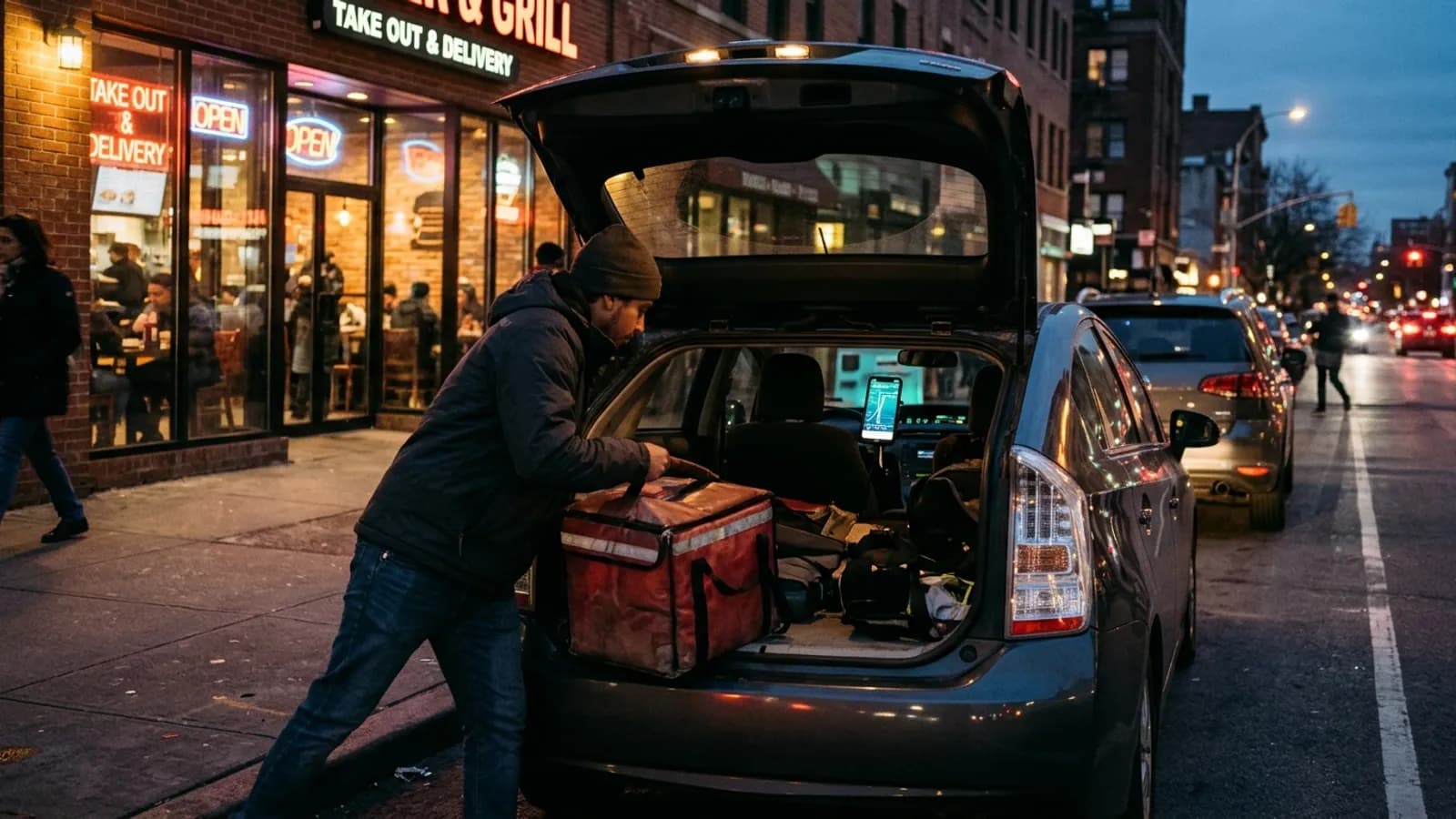
No — personal auto policies exclude delivery for pay. DoorDash, Uber Eats, and restaurant runs are business use, and the livery exclusion applies the moment the app turns on. The fix is a delivery-covering endorsement ($10–$30 per month) or a commercial policy, because the platforms' own coverage during the waiting phases is thin.
The three phases of a delivery shift, and who pays in each
A delivery shift runs in phases, and coverage changes at each boundary:
| Phase | Status | Platform coverage | Personal policy | | | --- | --- | --- | | 1 — app on, waiting for an offer | The uncovered phase | Thin third-party liability, if any; nothing for the driver's car | Excluded — business use | | 2 — offer accepted, driving to the restaurant | Partial | Contingent coverage begins on some apps; food apps commonly provide less than passenger rideshare | Excluded | | 3 — food aboard, en route to the customer | Strongest | Usually the platform's best phase; limits differ by app | Excluded |
The structural fix is the same in all phases: a delivery-covering endorsement closes phase 1 for $10–$30 per month. The period mechanics come from the rideshare insurance guide, which shares the same three-period skeleton.
The multi-app driver's coverage stack
Drivers who run passenger and food apps on the same evening carry the most fragile coverage stack in gig work, and the fragility lives in the endorsement's language. A rideshare-only endorsement extends personal coverage into period 1 for passenger apps but can exclude food-delivery periods entirely; a delivery-inclusive endorsement names food apps explicitly.
The verification question is exact: "Does this endorsement cover DoorDash and Uber Eats deliveries, not just passenger rideshare?" — the answer, in writing, is the coverage. The cost ladder: endorsement at $10–$30 per month; a commercial policy at $150–$300+ per month. The crossover is hours, not preference — under roughly 25–30 active hours a week the endorsement usually wins; above it, the commercial policy prices the exposure honestly. The full gig stack, including the income and health sides, is the gig economy insurance checklist.
The phase-1 crash, priced without coverage
The uncovered version of the gap is worth pricing once, because it ends the debate. Worked example: a driver activates the app on a Friday evening, waits for an offer, and is rear-ended at a light — $9,400 in damage to the driver's car, $6,200 in damage to the other vehicle, and a soft-tissue claim against the driver. The personal insurer denies for business use. The food platform's waiting-phase liability, where it exists, is a thin third-party layer that pays part of the other driver's property damage and nothing for the driver's car. The $9,400 car, the balance of the liability, and the injury claim land on the driver personally — against the $10–$30 per month that would have closed phase 1.
The disclosure conversation with your insurer, scripted
The delivery-coverage conversation is five minutes, and it is the difference between a claim and a denial letter. The script:
- State that you drive for delivery apps, and name them.
- Ask whether the policy excludes livery or business use — it does; get the exclusion confirmed.
- Ask what delivery endorsement the carrier offers and which apps it names.
- Add the endorsement before the next shift — not after the first one.
- Keep the written confirmation with the policy file.
The concealment math is the reason to disclose immediately: an undisclosed delivery driver who crashes in phase 1 faces a personal-policy denial for business use, no platform coverage, and — in the worst file reviews — a misrepresentation flag that risks the whole policy, not just the claim. Disclosure with the endorsement converts the same crash into a normal claim with a normal deductible. The permissive-use and driver-listing rules that shape the rest of the policy are in the other drivers guide.
Quick answer: does car insurance cover food delivery?
No — the personal auto policy's business-use (livery) exclusion applies the moment you deliver for pay, and most carriers deny delivery claims outright without an endorsement.
- The exclusion is trigger-based: delivering for pay is commercial use whether the app is on, an order is in the car, or you are between runs.
- Platform insurance is partial: most food-delivery apps carry contingent liability coverage while on-app — liability only, no coverage for your own car's damage.
- The fix is a rideshare/delivery endorsement — most carriers sell one that extends personal coverage through the app periods for a small monthly add.
- Unreported delivery is the misrepresentation pattern: a delivery claim filed on a personal policy that never disclosed the work voids it.
The trap: assuming the app's insurance covers your car. It covers other people; the food delivery guide and the rideshare insurance guide walk the period-by-period map.
What the right setup costs, priced
A delivery/rideshare endorsement commonly adds $10–$30 per month to the personal policy — against a delivery claim that would otherwise be denied in full. Full commercial policies price for full-time delivery volume and price in the hundreds per month. The arithmetic is the same every time: the endorsement costs a pizza run's worth of tips per month; the denial costs the whole claim.
Related guides
The neighboring work is the pricing baseline the endorsement stacks onto, the exclusion mechanics behind the denial, and the liability line the injury claim lands on.
- Average Cost of Car Insurance in 2026 — the baseline the endorsement price stacks onto.
- What Is an Exclusion in Insurance? — how the livery exclusion is written and applied.
- What Is Bodily Injury Liability? — the coverage the injury claim lands on.
- Car Insurance: The Complete Guide — the hub for coverage structures and state rules.
Sources
Frequently asked questions
Does a rideshare endorsement automatically cover food delivery?
Not necessarily — many rideshare endorsements cover passenger-app periods only and exclude food-delivery phases. Ask the insurer the exact question: does the endorsement cover DoorDash, Uber Eats, or the specific app by name? Get the answer in writing before the next shift.
Is delivering for a local restaurant in my own car covered?
Only with a delivery-appropriate endorsement or a commercial policy — restaurant delivery is livery use, excluded from every personal policy. Restaurant-owned vehicles carry the restaurant's commercial coverage, but an employee driving a personal car needs personal delivery coverage before the first run.
Will my personal insurer cancel me if I disclose food delivery?
Disclosure itself does not trigger cancellation — carriers either sell the delivery endorsement or, rarely, decline the business-use exposure. Concealment is what costs the policy: undisclosed delivery use discovered at claim time is a misrepresentation problem that can void coverage retroactively.
How much does delivery insurance cost?
Delivery or rideshare endorsements run $10–$30 per month on a personal policy; commercial policies commonly price $150–$300+ per month. The endorsement is the part-timer's fix, and the crossover to a commercial policy is hours — roughly 25–30 active hours a week in most markets.
What happens if I crash while delivering without proper coverage?
The personal insurer denies the claim as business use, the platform's coverage is limited or absent in the waiting phase, and the damage to the driver's car plus the other party's claims land on the driver personally. A pattern of undisclosed delivery can void the whole policy retroactively.
How we researched this guide
Car insurance pricing is set per driver, per ZIP code — so our guides anchor on regulator and industry statistics and explain the factors, not a fake exact price.
- Premium ranges are anchored to NAIC statewide average-expenditure data, the most complete public dataset on what drivers actually pay per state.
- State minimum-coverage requirements are checked against each state's motor-vehicle financial-responsibility statute and the state insurance department's consumer pages.
- What a coverage actually pays for is verified against policy declarations and specimen forms, not marketing copy.
- Discount and surcharge rules cite the state DOI consumer bulletin where each state regulates them differently — for example credit-based insurance scores, which most states permit but a few ban.
Where facts vary by state or insurer, we publish the range and the reason for the variation rather than a single misleading average. We do not sell insurance, take money from insurers for coverage, or publish claim amounts we cannot trace to a source.
Sources
The primary sources behind the facts on this page. Last verified November 17, 2026.
- IIHS — Insurance Institute for Highway Safety — crash-test data, vehicle loss statistics, and safety-feature research.
- NHTSA — National Highway Traffic Safety Administration — recalls, crash data, and state traffic-safety requirements.
- FMCSA — Federal Motor Carrier Safety Administration — commercial vehicle and carrier insurance requirements.
- NAIC — National Association of Insurance Commissioners — model regulations, consumer guides, and industry statistics.
- Find your state insurance regulator (NAIC directory) — every state insurance department — the authority for your state's rules and complaint filing.
- Insurance Information Institute (III) — industry statistics and consumer explainers we cross-check against regulator publications.
Rules that vary by state are verified against the state insurance department's consumer pages — find yours via the NAIC directory above.
Keep reading
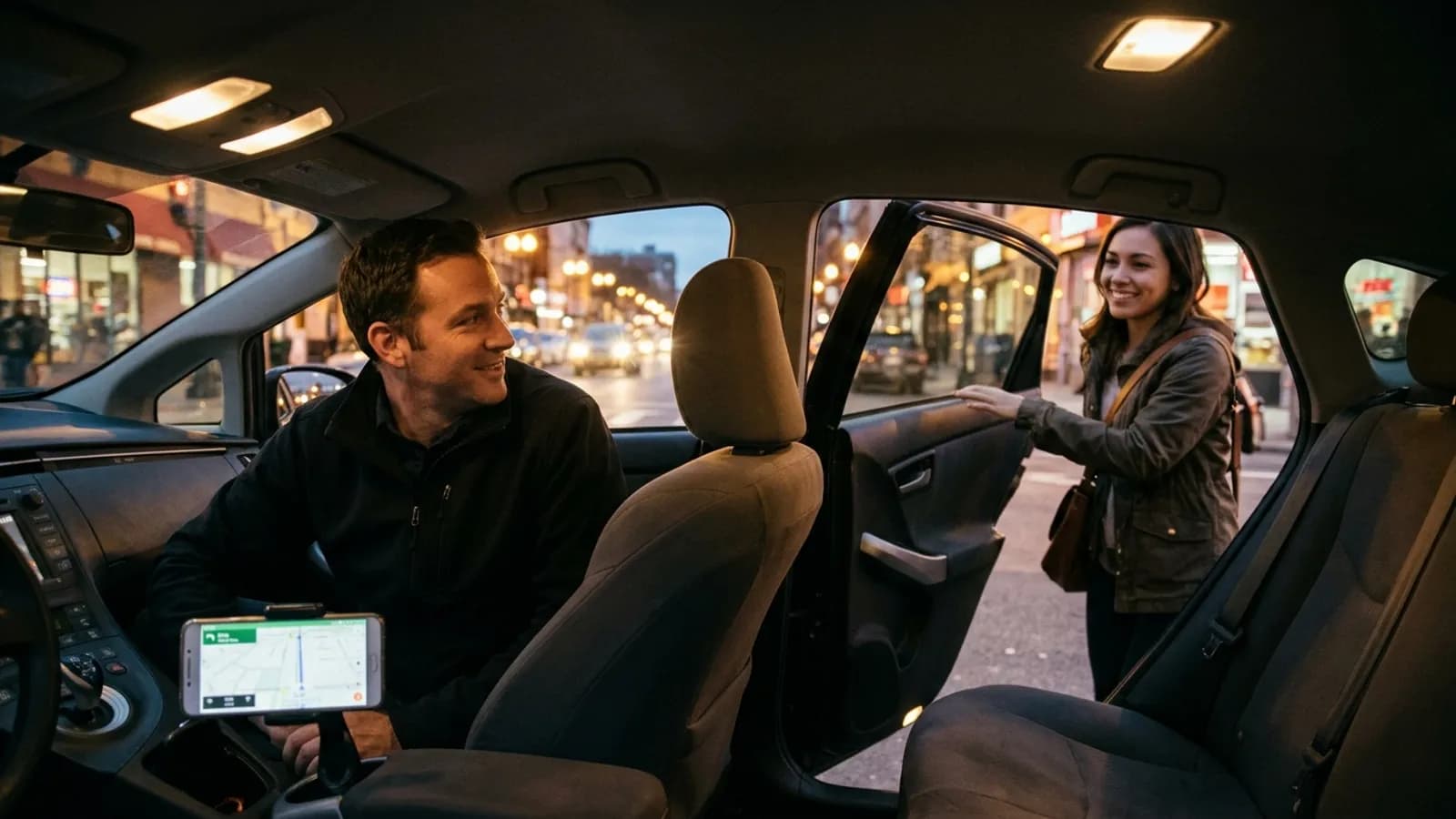
Rideshare Insurance: The 3-Period Gap That Can Void Your Policy
Rideshare insurance closes the period-1 gap: when the app is on and no ride is accepted, personal policies exclude business use. Endorsements run $10–$30 a month.
Read guide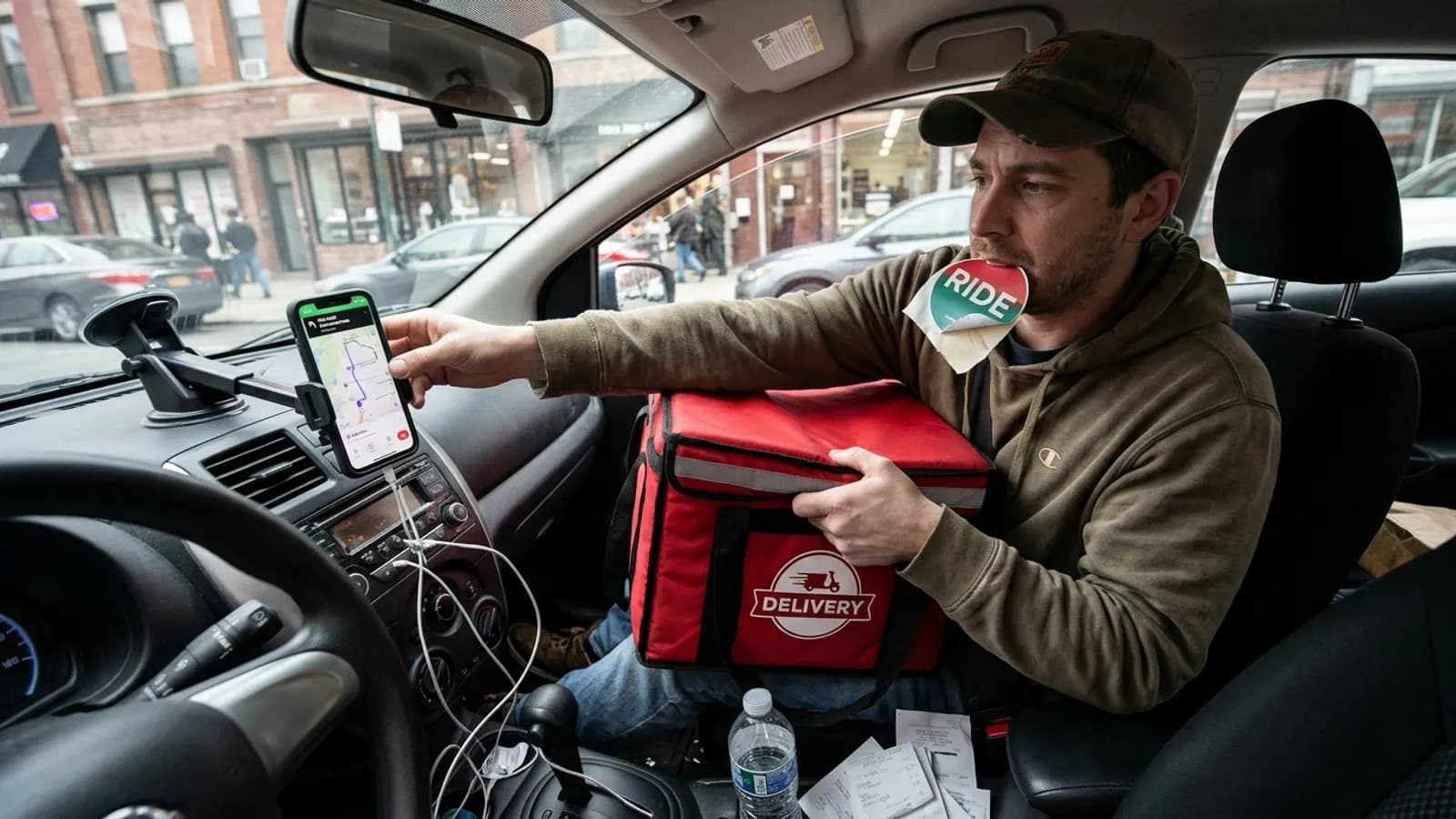
Gig Economy: Insurance Checklist
Gig-economy insurance checklist: rideshare and delivery endorsements, the waiting-phase gap, health coverage for 1099 income, and when commercial auto takes over.
Read guide
Does Car Insurance Cover Other Drivers?
Car insurance follows the car: permissive use covers occasional permitted drivers, household members must be listed, and a named exclusion voids coverage.
Read guide
Car Insurance: The Complete Guide
Car insurance bundles liability, collision, comprehensive, and medical coverage — this guide explains state minimums, full coverage, and how to lower the premium.
Read guideWhat Is Material Misrepresentation?
Material misrepresentation is a false statement or omission on an application that would have changed the underwriting decision — grounds for rescission.
Read guide