
Car Insurance in Michigan: Why It's Unique and What It Costs
Michigan car insurance commonly runs $2,000–$3,500+ per year for full coverage. Selectable PIP, Detroit pricing, and winter pothole claims shape every quote.
Why you can trust this guide
- Written by Daniel Reyes, AINS, former licensed P&C agent — independent insurance education publisher.
- Factual accuracy reviewed and signed off by Marcus Hale, CPCU, AINS, licensed P&C agent (Independent insurance reviewer).
- Every factual claim traces to a regulator, statute, or policy document — sources are listed at the bottom of the page.
- Last verified ; time-sensitive guides are re-checked at least twice a year. Read our editorial policy.
On this page
Michigan car insurance is unlike any other state's: a pure no-fault system where your own policy pays crash medical bills through Personal Injury Protection — and since 2019, you choose the PIP level. Full coverage commonly runs $2,000–$3,500+ per year, historically among the nation's most expensive, with Detroit in a pricing tier of its own.
The Michigan system, decoded
A Michigan policy has parts other states don't:
| Component | What it does | Your choice |
|---|---|---|
| PIP (Personal Injury Protection) | Pays your (and household members') medical costs from crashes, regardless of fault — unlimited lifetime medical was the historic default | Select: unlimited, $500k, $250k, or Medicare-coordinated options |
| Property Protection Insurance (PPI) | Pays up to $1 million for damage you cause to parked or stationary property | Mandatory |
| Residual bodily injury/property liability | Pays others for injuries and damage beyond the no-fault provisions — minimums of 50/100/10 since the 2020 reform | Limits up to you |
| Uninsured/underinsured motorist | Covers recovery for pain and suffering when the at-fault driver's liability falls short | Included unless rejected in writing |
| Collision / comprehensive | Your own vehicle damage | Optional (lenders require) |
The $1 million PPI line is uniquely Michigan: it exists because the state's old no-fault framework made drivers liable for damage to stationary property without limit, so the mandate fills what would otherwise be a catastrophic gap — tapping a parked car or a building is a PPI claim, not a small liability claim.
The PIP decision — Michigan's biggest lever
Since the 2019 reform, PIP selection materially reprices the policy:
| PIP choice | Fits |
|---|---|
| Unlimited | No qualifying health coverage, or maximum caution — the historic Michigan default |
| $500k / $250k | Households with strong employer health plans covering crash care |
| Medicare-coordinated (limited) | Medicare-eligible drivers with qualifying coverage |
The trap to avoid: choosing a low PIP level while carrying thin health insurance. A serious crash then bills through a health plan with its own limits, networks, and exclusions — the PIP discount is real, but it is a risk transfer to you, not free money. Households with good employer health coverage are the natural candidates for the middle tiers.
What Michigan drivers pay
| Profile | Typical annual premium |
|---|---|
| Statewide full coverage | $2,000–$3,500+ per year |
| Detroit | $3,500–$6,000 per year (see the Detroit city guide) |
| Grand Rapids and the suburbs | ~$1,600–$2,400 per year |
| Rural Michigan | ~$1,400–$2,000 per year |
| Unlimited PIP → $250k–$500k PIP switch | Commonly saves 15–40% of the PIP portion |
| One at-fault crash | +25–50% |
Detroit's range comes from the city guide linked in the table. The PIP switch row is the state-specific lever — see how to lower car insurance for the rest.
What Michigan law requires
- Residual liability minimums are 50/100/10 — $50,000 bodily injury per person, $100,000 per accident, $10,000 property damage, raised from 20/40 by the 2019/2020 no-fault reform (the Michigan DIFS confirms current figures).
- PPI $1 million is mandatory on every policy, covering damage you cause to parked or stationary property.
- PIP is required but selectable — unlimited, $500k, $250k, or Medicare-coordinated, subject to your qualifying health coverage.
- UM/UIM is included unless rejected in writing — and because PIP handles medical bills, UM/UIM in Michigan covers what PIP leaves out: recovery for pain and suffering when the at-fault driver's liability falls short.
- The MCCA assessment rides on every policy — a per-vehicle charge funding catastrophic claims, published annually by the Michigan Catastrophic Claims Association.
The Michigan claim landscape
- PIP-heavy injury claims — every Michigan injury claim opens with your own PIP, and catastrophic-injury cases (the MCCA's caseload) are the structural cost behind the state's premium profile.
- Parked-property damage claims — Michigan's PPI mandate handles damage to parked cars, buildings, and fences at up to $1 million, a claim type that barely exists in other states.
- Detroit theft and uninsured-driver claims — Detroit's vehicle-theft rates and uninsured-driver share have long led the nation's metros; both feed comprehensive claims and the city's extreme pricing.
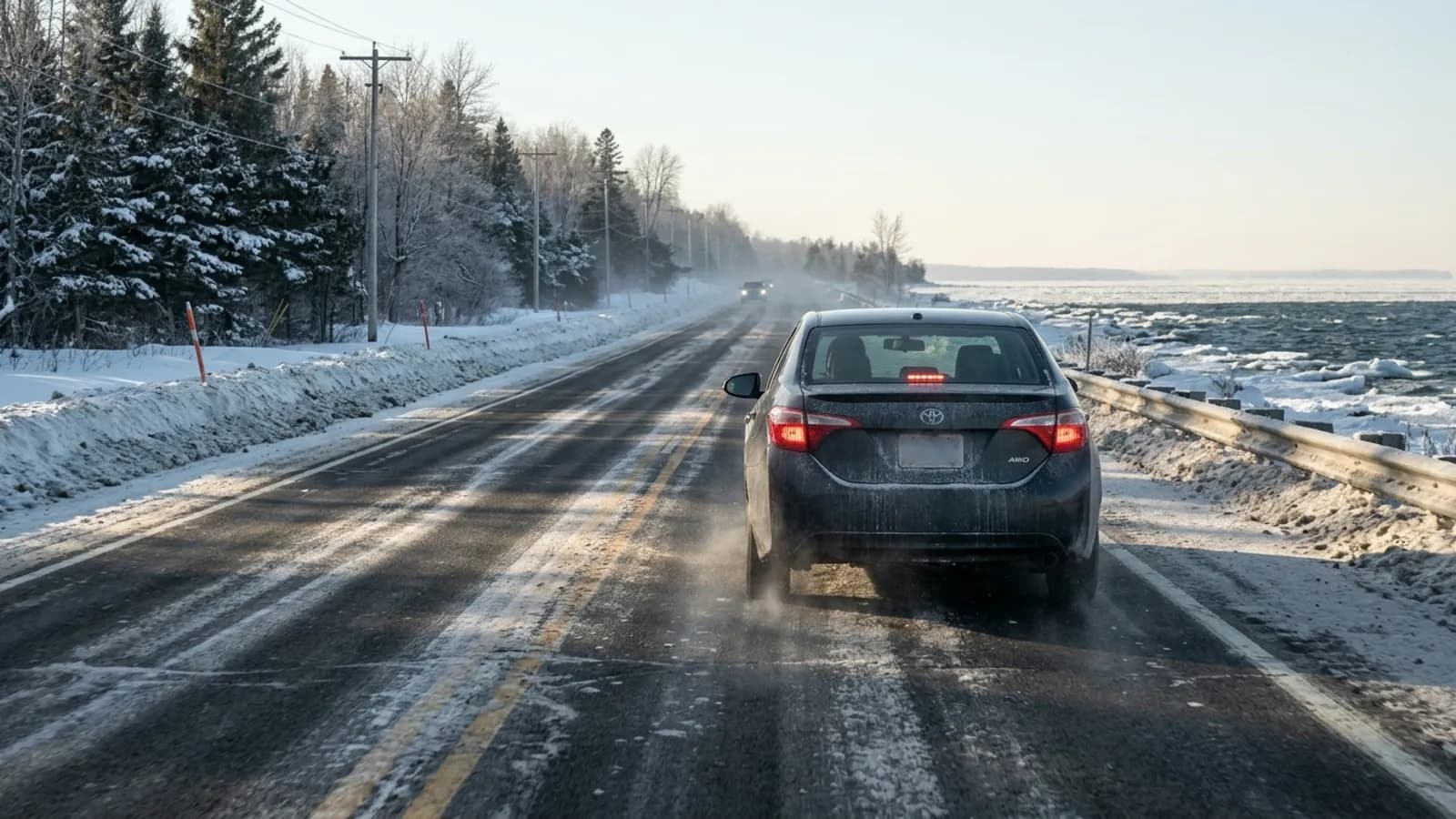
- Winter and pothole claims — Michigan's freeze-thaw pothole seasons and lake-effect snow produce suspension damage (not covered without a collision) and winter collision claims statewide.
- No-fault threshold litigation — Michigan's residual-liability lawsuits over pain and suffering concentrate in severe-injury cases, shaping claim severity more than frequency.
- Upper Peninsula logistics — the UP's long distances between body shops (and the Mackinac Bridge chokepoint) add freight and delay to every claim north of the bridge, a structural cost that rural Michigan premiums quietly carry.
Coverage setup that fits Michigan
- Revisit PIP at every renewal — health-coverage changes (new job, Medicare eligibility) change the optimal level; see what PIP covers.
- Keep residual liability high. Michigan's 50/100/10 minimums are better than they once were but still thin; 100/300/100 costs little on top of the PIP decision.
- Keep UM/UIM at liability limits — in Michigan it covers the pain-and-suffering gap, not your medical bills, so its value tracks your liability choice.
- Shop aggressively. Michigan's carrier dispersion is extreme; the same driver sees spreads over $1,000 per year. See how to switch car insurance.
- Bundle and re-quote after moving — Detroit-metro zip codes versus suburbs reprice dramatically, and the MCCA assessment applies equally everywhere.
Why Michigan prices the way it does
Michigan's premium profile is the residue of the most generous no-fault medical system in American history. Until 2019, every Michigan policy carried unlimited lifetime crash-medical coverage, and the claims that built up — catastrophic brain and spinal injuries funded for decades — set the actuarial baseline the state still climbs down from. The 2019 reform made PIP selectable, and the MCCA assessment that funds old catastrophic claims continues to ride on every policy. On top of that structure sit Detroit's urban claim realities (theft, uninsured drivers, dense claims) and a winter-and-pothole season that loads collision claims statewide. The result is a state where the coverage decision that matters is not "liability or full coverage" but "which PIP level" — a decision worth 15–40% of the premium for households with strong health coverage, and a genuine risk transfer for households without it. Price the exact address, revisit PIP at renewal, keep residual liability and UM/UIM at real limits, and treat Detroit's $3,500–$6,000 band as its own market. The Michigan DIFS consumer guides walk through the PIP election forms and the MCCA assessment line by line — the two Michigan-specific documents that most directly change what a household actually pays.
Related guides
Michigan's PIP decision and Detroit's market are the two things every Michigan driver should read next.
- Car Insurance: The Complete Guide — the hub for coverage types and how Michigan's no-fault package compares nationally.
- What Is Choice No-Fault? — the framework Michigan's PIP selection sits inside.
- What Does Full Coverage Cover? — the physical-damage lines Michigan winters stress-test.
- Average Cost of Car Insurance in 2026 — national benchmarks against Michigan's $2,000–$3,500+ per year.
- What Is Uninsured Motorist Coverage? — how the UM/UIM line works alongside Michigan PIP.
Car insurance in other states
Every state prices and regulates differently — compare the neighbors:
-
Free Car Insurance Quotes: Compare Rates by State (2026) — how the 50/100/10 residual-liability floor and the PIP choice shape Michigan quotes.
Sources
- Michigan Department of Insurance and Financial Services (DIFS) — auto insurance consumer guides
- Michigan Legislature — No-fault act
- III — No-fault insurance
Frequently asked questions
How much is car insurance in Michigan?
Michigan full coverage commonly runs $2,000–$3,500+ per year — historically among the nation's highest — driven by Detroit's urban market, the unlimited-medical legacy, and the state's no-fault structure. Detroit prices at $3,500–$6,000 per year; Grand Rapids and the suburbs run roughly $1,600–$2,400, and rural Michigan $1,400–$2,000.
What makes Michigan car insurance different?
Michigan is a pure no-fault state: your own PIP pays crash medical bills regardless of fault, and since 2019 you choose the PIP level — unlimited, $500,000, $250,000, or Medicare-coordinated options. Michigan also mandates $1 million of Property Protection Insurance and residual liability minimums of 50/100/10, a package no other state matches.
What PIP level should I choose in Michigan?
It depends on your health coverage: drivers with qualifying Medicare can choose the $50,000 Medicare-coordinated option; households with strong employer health plans sometimes drop to $250,000 or $500,000; those without robust health insurance should keep unlimited PIP. The choice is the single biggest Michigan premium lever — a real risk decision, not just a discount.
Why is Detroit car insurance so expensive?
Decades of unlimited medical benefits baked into premiums, dense urban claims, theft, and high uninsured-driver rates made Detroit historically the most expensive city in America for car insurance — now $3,500–$6,000 per year for full coverage. The 2019 reforms lowered averages, but Detroit still prices far above its suburbs.
Is uninsured motorist coverage required in Michigan?
Michigan policies include uninsured/underinsured motorist coverage unless you reject it in writing. Because Michigan PIP already covers your own medical bills regardless of fault, UM/UIM here covers the gap PIP leaves — pain-and-suffering recovery when the at-fault driver carries too little — which is why carriers recommend keeping it.
What is the MCCA fee on my Michigan bill?
The Michigan Catastrophic Claims Association (MCCA) assessment is a per-vehicle charge on every Michigan policy that funds catastrophic-injury claims; it has run at roughly $100 per vehicle per year in recent years and adjusts annually. The Michigan DIFS publishes the current figure — check it at renewal, since it moves your bill directly.
How we researched this guide
Car insurance pricing is set per driver, per ZIP code — so our guides anchor on regulator and industry statistics and explain the factors, not a fake exact price.
- Premium ranges are anchored to NAIC statewide average-expenditure data, the most complete public dataset on what drivers actually pay per state.
- State minimum-coverage requirements are checked against each state's motor-vehicle financial-responsibility statute and the state insurance department's consumer pages.
- What a coverage actually pays for is verified against policy declarations and specimen forms, not marketing copy.
- Discount and surcharge rules cite the state DOI consumer bulletin where each state regulates them differently — for example credit-based insurance scores, which most states permit but a few ban.
Where facts vary by state or insurer, we publish the range and the reason for the variation rather than a single misleading average. We do not sell insurance, take money from insurers for coverage, or publish claim amounts we cannot trace to a source.
Sources
The primary sources behind the facts on this page. Last verified November 16, 2026.
- IIHS — Insurance Institute for Highway Safety — crash-test data, vehicle loss statistics, and safety-feature research.
- NHTSA — National Highway Traffic Safety Administration — recalls, crash data, and state traffic-safety requirements.
- FMCSA — Federal Motor Carrier Safety Administration — commercial vehicle and carrier insurance requirements.
- NAIC — National Association of Insurance Commissioners — model regulations, consumer guides, and industry statistics.
- Find your state insurance regulator (NAIC directory) — every state insurance department — the authority for your state's rules and complaint filing.
- Insurance Information Institute (III) — industry statistics and consumer explainers we cross-check against regulator publications.
Rules that vary by state are verified against the state insurance department's consumer pages — find yours via the NAIC directory above.
Keep reading

Car Insurance: The Complete Guide
Car insurance bundles liability, collision, comprehensive, and medical coverage — this guide explains state minimums, full coverage, and how to lower the premium.
Read guideFree Car Insurance Quotes: Compare Rates by State (2026)
Free car insurance quotes explained — what drivers pay by state and age in November 2026, the information insurers request, and how to compare quotes fairly.
Read guideCar Insurance in Detroit, MI: Costs and Guide (2026)
Car insurance in Detroit costs about $3,500–$6,000 per year, with PIP-selection choices, dense urban claims, and theft keeping it among America's priciest cities.
Read guide
What Does Full Coverage Car Insurance Cover?
Full coverage car insurance is liability plus comprehensive and collision — what each part pays, what it excludes, what it costs, and when liability-only wins.
Read guideWhat Is Personal Injury Protection (PIP)?
Personal injury protection (PIP) pays your medical bills and some lost wages after a crash regardless of fault — required in no-fault states, optional elsewhere.
Read guideWhat Is Choice No-Fault?
Choice no-fault lets drivers elect between no-fault PIP coverage and tort rights — Kentucky, New Jersey, Pennsylvania, and Michigan run the versions.
Read guide