
Does Homeowners Insurance Cover Airbnb Hosting?
No — homeowners policies exclude business activity and short-term rentals. Airbnb hosting needs a home-sharing endorsement or dedicated STR coverage.
Why you can trust this guide
- Written by Daniel Reyes, AINS, former licensed P&C agent — independent insurance education publisher.
- Factual accuracy reviewed and signed off by Marcus Hale, CPCU, AINS, licensed P&C agent (Independent insurance reviewer).
- Every factual claim traces to a regulator, statute, or policy document — sources are listed at the bottom of the page.
- Last verified ; time-sensitive guides are re-checked at least twice a year. Read our editorial policy.
On this page
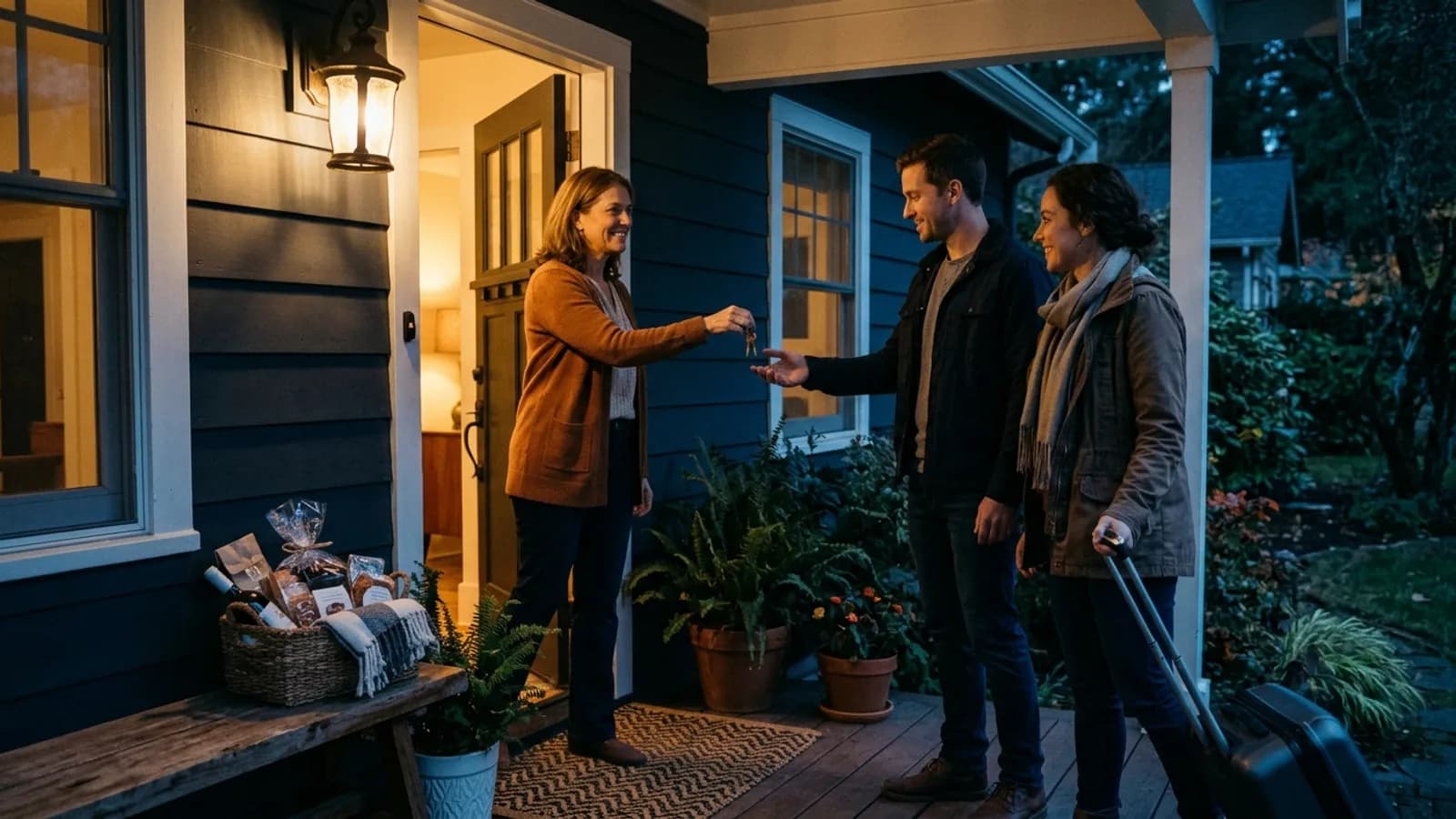
No — homeowners policies exclude business activity and short-term rentals, and hosting on Airbnb is both. The honest routes are a home-sharing endorsement for occasional hosting or dedicated short-term-rental insurance; Airbnb's own protections are a convenience layer, not a policy.
The deciding line: business activity is excluded
Standard homeowners policies exclude business activity, and short-term rental use on top of it — which is why "how often do you rent it" appears on nearly every application and claim investigation. The standard policy pays a guest-injury claim from your private life; a paying guest is a hospitality business exposure the form never priced. The exclusion is enforceable precisely because the occupancy question was on the application — an undisclosed listing is textbook misrepresentation territory.
The hosting ladder by frequency
The insurance answer changes with how often the door opens to paying guests. An occasional home-share — a few weekends a year, owner present — is the only scenario where a standard HO-3 plus a home-sharing endorsement (offered by a growing set of carriers) can work; the endorsement extends liability and sometimes property coverage to that narrow use. Regular hosting with the owner present generally needs a carrier that explicitly permits short-term rental use. Renting the whole house on a standing calendar is a different product entirely: dedicated short-term-rental policies priced like small hospitality risks, with higher liability limits, guest-caused damage lines, and loss-of-rents features. Longer-term tenants move you to a different product again — the landlord insurance guide covers the DP-3 side.
The two Airbnb layers, and what they are not
Airbnb's own protections are commonly conflated with insurance, and they are not insurance. Host damage protection (part of AirCover) reimburses hosts for guest-caused damage to the property up to a published cap — but it is a platform program with claim rules, exclusions, and payment timelines controlled by Airbnb, not a policy that pays third parties. Host liability protection responds to guest-injury claims up to its stated limit. Neither replaces a policy: the platform's damage program does not answer your mortgage lender, the payout logic is discretionary, and coverage for a guest-injury lawsuit in court is exactly what the platform's terms say it is not. The professional framing: platform coverage is a convenience layer on top of the correct insurance, never the correct insurance itself.
The claims that actually happen, and the file you keep
The realistic loss profile is water damage, guest-caused interior damage, theft of contents, and slip-and-fall liability — not fire. Four artifacts decide how those claims go: a dated booking record (platform export) proving who occupied the home when; move-in photos or a walkthrough video for each stay on long bookings; a house-rules acknowledgment for the scenarios your policy cares about (pools, fires, pets); and the incident report filed through the platform, which creates a third-party timestamp. Two habits close the biggest gaps: reporting every incident to your own carrier even when the platform will pay, and never letting a guest "settle" an injury claim informally — an unreported injury with a signed text-message apology later becomes an unrebuttable liability claim.
Related guides
The hosting question connects to the landlord side, the coverage map, and the denial patterns that follow undisclosed use.
- What Is a Rider in Insurance? — the mechanism behind the home-sharing endorsement.
- Becoming a Landlord: Insurance Checklist — the conversion steps if hosting becomes renting.
- What Does Homeowners Insurance Cover? (And What It Never Covers) — the exclusion list hosting collides with.
- What Is Material Misrepresentation? — the denial ground an undisclosed listing creates.
- Home Insurance: The Complete Guide — the hub framing the property policy family.
- Does Renters Insurance Cover Airbnb Stays? — the home-sharing question from the tenant side.
Sources
Frequently asked questions
Does homeowners insurance cover Airbnb guest damage?
No — guest damage from hosting is business exposure, excluded from personal policies. Airbnb's host damage protection (part of AirCover) reimburses some guest-caused property damage up to a published cap, but it is a platform program with its own claim rules, not an insurance policy. The dedicated short-term-rental policy is the complete answer.
What insurance do I need for an Airbnb?
Dedicated short-term-rental insurance (property + liability + loss of income), plus the platform's guarantees as a backup layer — never the primary. An occasional home-share with the owner present may work on a standard HO-3 plus a home-sharing endorsement where offered. Long-term rentals need landlord insurance instead — a different product entirely.
Am I liable if an Airbnb guest is injured at my house?
Yes — and your homeowners policy likely excludes the business liability, which is exactly where a hosting claim goes wrong. Airbnb's Host Liability protection and the STR policy's liability section are the products that respond; read the exclusions between them before the first guest arrives, and report every incident to your own carrier even when the platform will pay.
Can I get one policy that covers both my family and my Airbnb rentals?
Usually not with one standard policy, but several carriers sell hybrid products that cover owner-occupancy plus permitted short-term rental use under a single form. Availability is carrier-specific and often state-specific. If your carrier offers no home-sharing endorsement, the practical route is a dedicated short-term-rental policy, even for part-time hosting.
What happens if my HOA bans short-term rentals after I start hosting?
The insurance problem is secondary to a contract problem — an HOA prohibition can trigger fines and forced stoppage regardless of your policy. From the insurance side, carriers ask about lease or association restrictions because illegal use can void coverage the same way undisclosed occupancy does. Check the association documents before the first listing goes live, not after the first guest.
Does the home-sharing endorsement cover booking cancellations?
No — lost revenue when a guest cancels is a platform-business matter, not a covered peril under home-sharing endorsements. Short-term-rental policies sold to full-time hosts sometimes include loss-of-income features, but they respond to perils like fires making the home unrentable, not to booking slumps. Cancellation protection is a platform feature, if you want it at all.
How we researched this guide
Home policies are forms-driven: the peril list in the form decides what gets paid, so our guides follow the policy form structure.
- Coverage explanations track the standard HO-3/HO-5 form structure — Coverage A through E — because that's the contract language adjusters apply.
- Flood facts come from FEMA's National Flood Insurance Program (floodsmart.gov), since standard home policies exclude flood.
- Regional cost ranges are built from NAIC home-owners insurance statistics, with the drivers of variation (construction, age, wind/hail exposure) named explicitly.
- Mitigation and eligibility claims cite IBHS research and state fair-plan rules where standard market access is an issue.
Where facts vary by state or insurer, we publish the range and the reason for the variation rather than a single misleading average. We do not sell insurance, take money from insurers for coverage, or publish claim amounts we cannot trace to a source.
Sources
The primary sources behind the facts on this page. Last verified November 10, 2026.
- FEMA — National Flood Insurance Program (FloodSmart) — flood coverage, which standard homeowners policies exclude.
- Insurance Institute for Business & Home Safety (IBHS) — property-loss research and mitigation standards that affect eligibility and discounts.
- U.S. Department of Housing and Urban Development (HUD) — FHA-insured property requirements and disaster assistance programs.
- NAIC — National Association of Insurance Commissioners — model regulations, consumer guides, and industry statistics.
- Find your state insurance regulator (NAIC directory) — every state insurance department — the authority for your state's rules and complaint filing.
- Insurance Information Institute (III) — industry statistics and consumer explainers we cross-check against regulator publications.
Rules that vary by state are verified against the state insurance department's consumer pages — find yours via the NAIC directory above.
Keep reading
What Is Landlord Insurance? (DP-3) Coverage and Costs
Landlord insurance (DP-3) covers the rental structure, your liability, and lost rent — not the tenant's belongings. Costs run $1,000–$2,500 per year.
Read guide
Becoming a Landlord: Insurance Checklist
Turning a home into a rental changes the policy you need: the HO-3-to-DP-3 conversion, fair-rental-value sizing, liability, lease clauses, and tenant requirements.
Read guide
What Does Homeowners Insurance Cover? (And What It Never Covers)
A standard HO-3 covers fire, wind, hail, theft, and burst pipes — and never floods, earthquakes, or gradual damage. The coverage buckets, exclusions, and fixes.
Read guide
Homeowners Insurance Claim Denied? The Appeal Playbook
Denied home claims follow patterns — exclusions, documentation gaps, misrepresentation. The appeal playbook: read the clause, cure the defect, escalate in order.
Read guideWhat Is an Exclusion in Insurance?
An exclusion is a peril, property type, or situation a policy does not cover — floods, earthquakes, wear and tear — marking exactly where your protection ends.
Read guide